
Why Am I Suddenly Anxious? Perimenopause, Mental Health, and the Hormonal Connection
Written by Dr Shauna Watts, GP with special interest in perimenopause and menopause care.
This Isn't Who You Are. It's Your Hormones.
You’ve never been an anxious person. Or maybe you have, but it was manageable. Now it’s different – a low-level hum of dread that doesn’t go away, sudden spikes of panic for no apparent reason, a sense that you’re not quite yourself. You might be snapping at people you love, or lying awake catastrophising about things that never used to trouble you.
This is one of the most distressing – and most overlooked – aspects of perimenopause. And it’s also one of the most commonly misdiagnosed. Women are prescribed antidepressants or referred to mental health services when what’s actually happening is a hormonal shift that’s directly affecting brain chemistry.
What Does Oestrogen Do in the Brain?
Oestrogen isn’t just a reproductive hormone. It plays a significant role in regulating mood, cognition, and anxiety. It influences the production and activity of serotonin, dopamine, and GABA – the brain’s key mood-regulating neurotransmitters.
When oestrogen fluctuates and declines in perimenopause, these systems are disrupted. Women who have never had anxiety before can develop it. Women who previously had manageable anxiety can find it becomes overwhelming. This is not a psychological weakness – it’s a neurobiological response to hormonal change.
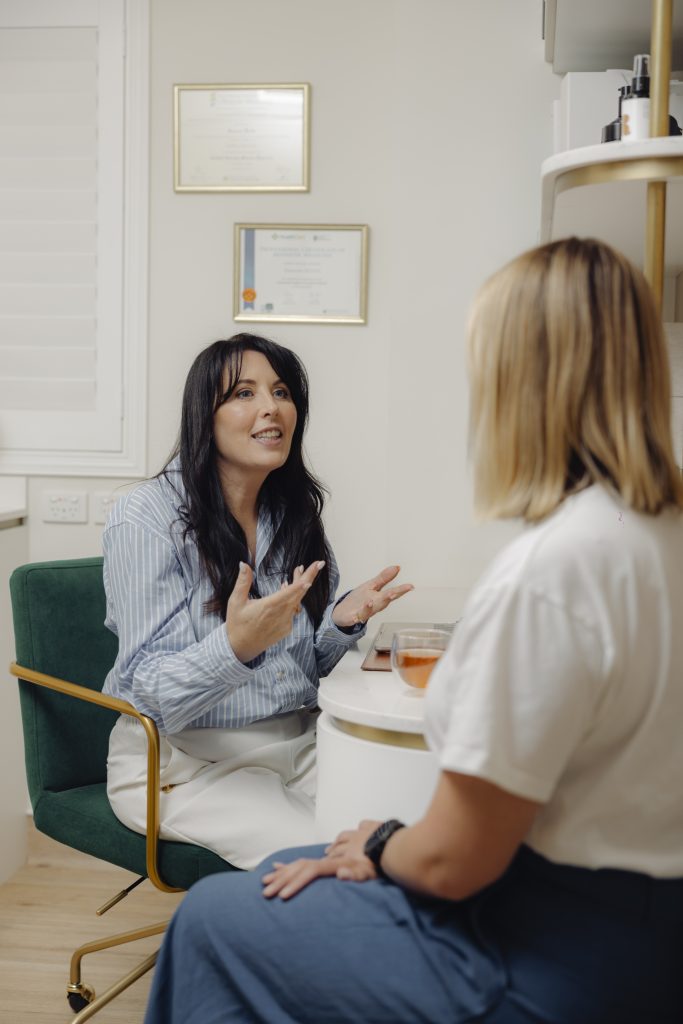
"When a woman in her 40s comes to me with new-onset anxiety and has never experienced it before, perimenopause is at the top of my differential. Hormones first."
- Dr Shauna Watts -
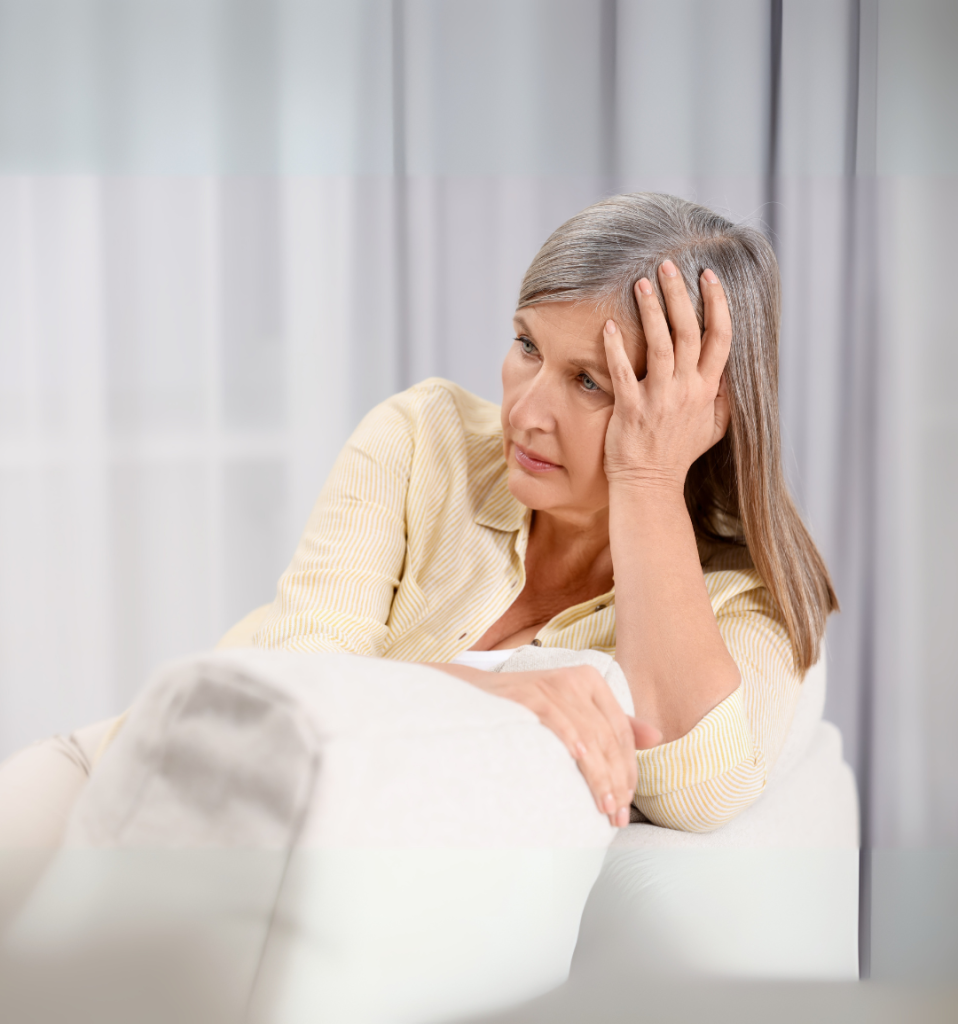
What Does Perimenopausal Anxiety Feel Like?
It doesn’t always present as classic worry or panic. Women describe:
- A sense of doom or dread without a clear cause
- Feeling overwhelmed by things that used to be manageable
- Rage or irritability that feels out of proportion
- Heart palpitations - which can themselves trigger health anxiety
- Social withdrawal and loss of confidence
- Feeling 'not like myself'
- Difficulty making decisions or tolerating uncertainty
Is It Anxiety or Is It Something Else?
Perimenopause can cause heart palpitations that mimic panic attacks. It can cause brain fog that feels like anxiety about losing your mind. It can cause irritability and mood swings that look like depression. A thorough clinical assessment – not just a quick prescription – is essential to understand what’s actually driving your symptoms.
What Helps?
Menopausal Hormone Therapy (MHT)
For many women, restoring oestrogen is the most effective treatment for perimenopausal anxiety. This isn’t replacing the need for psychological support – it’s treating the biological driver. Many women find that once their hormones are stabilised, their anxiety reduces significantly without any other intervention.
Progesterone
Progesterone has a calming, anxiolytic effect through its action on GABA receptors. Its early decline in perimenopause may be one reason anxiety appears before other symptoms. Micronised progesterone is often particularly helpful.
Psychological support
Cognitive behavioural therapy (CBT) and mindfulness-based approaches have good evidence for anxiety. They work well alongside MHT – not as a substitute for it.
Lifestyle
Sleep, exercise, reduced alcohol, and blood sugar stability all directly influence anxiety. None of these are trivial suggestions – the evidence behind each of them for mood is strong.
Don’t dismiss antidepressants entirely
For some women, SSRIs or SNRIs are appropriate – particularly if there’s a significant depressive component, or MHT alone doesn’t fully resolve symptoms. But in perimenopause, they should rarely be the first and only option.
Frequently Asked Questions
Can perimenopause cause panic attacks?
Yes. Fluctuating oestrogen can cause surges in adrenaline, heart palpitations, and hot flushes that can trigger or mimic panic attacks. Treating the hormonal driver often resolves or significantly reduces these episodes.
Will my anxiety go away after menopause?
For many women, mood symptoms improve once hormones stabilise post-menopause. But this can take years, and there’s no reason to wait it out when effective treatment is available now.
My doctor offered me antidepressants but I don't feel depressed — just anxious. What should I do?
Ask specifically about perimenopause. Request that your hormonal status is considered as part of the picture. A GP with a special interest in menopause care will assess mood and anxiety in the context of your hormones, not in isolation.
Is rage a symptom of perimenopause?
Yes. Irritability, rage, and emotional reactivity that feel out of character are well-recognised symptoms of perimenopause. They’re driven by the same hormonal mechanisms as anxiety and are often significantly improved by MHT.
Central Coast Clinic
The Quarters, 960 Central Coast Hwy, Forresters Beach, NSW 2260 Call: 02 4302 8390
OPENING HOURS
Monday : 9am - 5pm
Tuesday : 9am - 1pm
Wednesday : 9am - 5pm
Thursday : 9am - 7pm
Friday : 8am - 5pm
Saturday : 8am - 3pm
Newcastle Clinic
Suite 16, 10-16 Kenrick St, The Junction, Newcastle NSW 2291 Call: 02 4929 7911
OPENING HOURS
Monday : 9am - 5pm
Tuesday : 9am-1pm
Wednesday : 9am - 5pm
Thursday : 11am - 7pm
Friday : 9am - 5pm
Updates and Insights
Follow Us
Central Coast
Newcastle
QUICK LINKS
© 2026, YOU by Shauna Watts. All right reserved.
Powered by Website Guy
The Quaters, 960 Central coast hwy forresters beach, NSW 2260
Suite 16, 10-16 Kenrick St
The Junction Newcastle 2291